

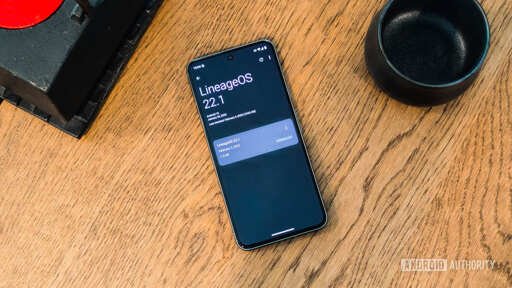
A new European initiative dubbed UnifiedAttestation aims to build a free and open-source alternative to Google’s Play Integrity checks. The initiative is backed by smartphone maker Volla, while other partners include /e/OS maker Murena and the team behind iodé OS. The feature will be distributed under an Apache 2.0 license.
Jeez. They really don’t. And, I guess they shouldn’t. Their stance is that device certification shouldn’t be necessary in the first place which I agree with considering this is not done for computers (don’t do this tech bro shitheads).
Grapheneos are also against allowing users root access, which is fine on PCs.
Are they, or are they against GrapheneOS itself supporting it?
Those are different. GrapheneOS exists to be security-hardened and usually should choose security over utility where there’s a conflict.
They arebgwnweally against root, as it “breaks security” in their mind.
Nevermind that all systems, everywhere, have root for some account/some account is root.
It breaks their sandboxing model, which limits the impact of malicious/compromised apps.
To be clear, I’m not arguing against root here. I daily a rooted phone, and I believe if it’s impossible to get root on something, it isn’t really yours. You can get root on GrapheneOS; they just discourage it because they’re strongly focused on security.
They’re right. If a bug in AdAway, which needs root to write /etc/hosts caused it to fetch and execute malicious code, the malware could do anything I can do to my device. The scenario is plausible; it routinely fetches blocklists, and I imagine a sophisticated enough attacker could compromise the delivery mechanism.
I don’t worry about that scenario because it’s unlikely that kind of attacker will target me. GrapheneOS is meant for people who do have to worry about that kind of thing.
@Onomatopoeia @Zak@lemmy.world
I don’t disagree.
Problem is their binary attitude about root.
Root us used, every day, on every system on the planet.
Even Windows now uses a more granular Admin system - which is a better approach.
In Linux we only escalate as-needed, and strictly limit accounts that are used for services (Windows too actually).
It is to some degree, with the TPM. Microsoft Surface laptops come to mind.
Actually i have been thinking about it and i do believe that it should be done for computers, actually. Like, an attacker could super easily steal your login credentials when they get 10-15 minutes with your computer once. They could do that by booting a custom OS, modifying some of your operating system’s system files to install a keyboard tracker or sth, and then just wait for you to enter your password.
I believe it’s actually why some banks i know don’t allow login anymore if you’re not using their Android apps to verify the login.
Secure boot for PCs has been a thing for a long time now. Many Linux distributions support it.
Yea, i know no bank that allows login in browser with only basic auth. All use some proprietary 2FA app with fancy QR codes (colour pixel or similar). Funnily, many banks then offer SMS based 2FA in order to restore…
Like make hard and secure login but reset option is old SMS thingy spoofable since… ever?
Bank apps are the worst. So much SMS 2FA. Faux security. Fuck banks.
Ally, capital one, chase support browser login with basic auth, and sometimes SMS 2fa. I’ve never used a mobile bank app
doesn’t work for me. i have to request paper letter sent to my home address with the new password, which i have to change after the first login.