A lot of juice is at least partially from concentrate for exactly that reason anyway. Such a waste to package the end product rather than the middle one that already exists…
Depends. How much energy is used evaporating the water to make it concentrated in the first place? And how much energy is used with a frozen supply chain, instead of just a merely cold supply chain?
I misread your comment as being focused on the energy considerations.
From this study, summarized here, producing and distributing “not from concentrate” juice uses less energy than concentrating and freezing, though (and lower CO2 emissions attributable to the process), because concentrating the juice takes more energy than shipping the whole thing. At least assuming the oranges are grown in Florida and sold in the United States.
That’s why I asked, because I knew that the U.S. relies more on imported citrus as the orange groves in Florida and California tend to get redeveloped into other real estate. And I’m wondering whether that analysis holds for oranges from Brazil or wherever.
Edit: am I missing something? I don’t see any discussion of the difference in energy costs for shipping concentrates vs juices, just for production of concentrates vs juices?
Actually I don’t see it in the PDF, either, although the Stanford Magazine article quantifies it in a way that suggests it was reported somewhere:
Once processed, the juices have to be transported to the markets. The concentrated forms take less energy because of their compact size and substantially lower weight. Nevertheless, even the energy-intensive distribution of Not From Concentrate orange juice only amounts for 22 percent of the juice’s total carbon dioxide emission. Of course, the emissions in this step greatly depend on distance from processing plants (mainly Florida, and also California), but in most cases, this consideration is not important enough to shift the balance.
The study report itself calls itself a preliminary findings, and the reporting around it was that they’d publish full findings at some point later.
Either way, that’s why I asked. I genuinely don’t know the answer or whether/when the lines would cross.


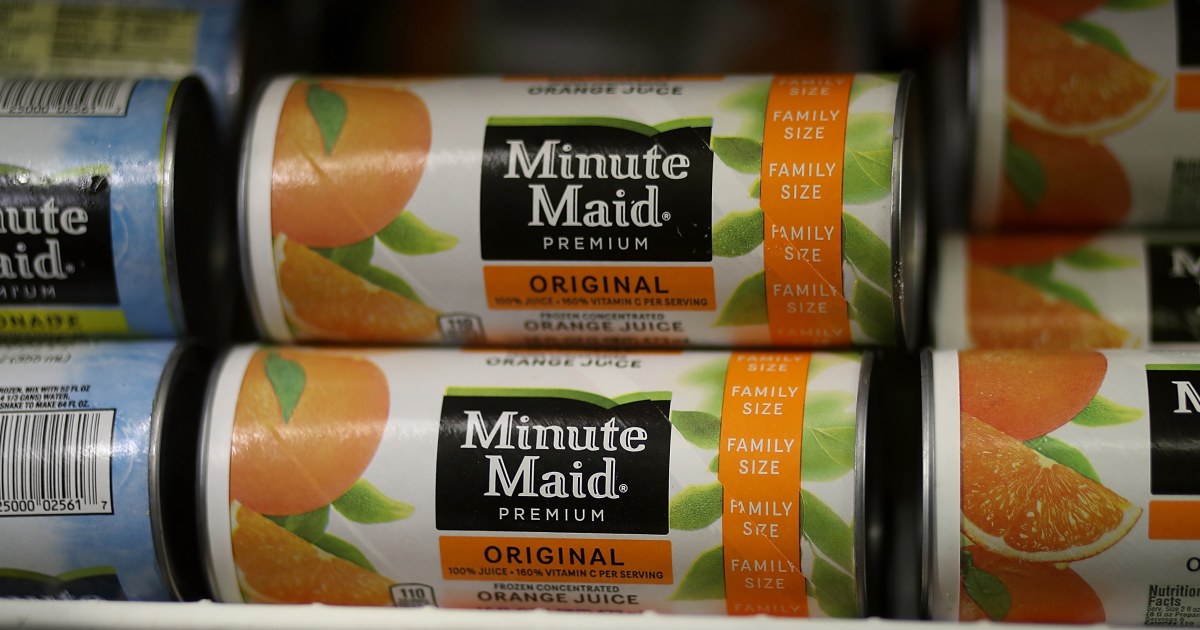
deleted by creator
A lot of juice is at least partially from concentrate for exactly that reason anyway. Such a waste to package the end product rather than the middle one that already exists…
Depends. How much energy is used evaporating the water to make it concentrated in the first place? And how much energy is used with a frozen supply chain, instead of just a merely cold supply chain?
deleted by creator
I misread your comment as being focused on the energy considerations.
From this study, summarized here, producing and distributing “not from concentrate” juice uses less energy than concentrating and freezing, though (and lower CO2 emissions attributable to the process), because concentrating the juice takes more energy than shipping the whole thing. At least assuming the oranges are grown in Florida and sold in the United States.
That’s why I asked, because I knew that the U.S. relies more on imported citrus as the orange groves in Florida and California tend to get redeveloped into other real estate. And I’m wondering whether that analysis holds for oranges from Brazil or wherever.
deleted by creator
Actually I don’t see it in the PDF, either, although the Stanford Magazine article quantifies it in a way that suggests it was reported somewhere:
The study report itself calls itself a preliminary findings, and the reporting around it was that they’d publish full findings at some point later.
Either way, that’s why I asked. I genuinely don’t know the answer or whether/when the lines would cross.
where I live, it is cheaper to buy oranges in bulk from local farmers and squeeze them myself
one of the few perks of living in brazil