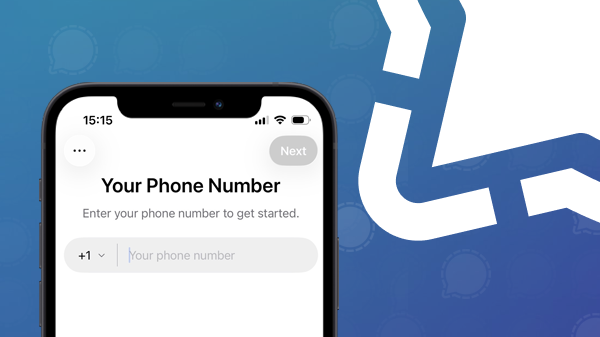
Signal is working on a way to sign up without a phone number. The feature has not yet been officially confirmed, and it is not yet known whether it will be available to all users or in what form.
Thank you for the clarification. I just wasn’t sure on the terminology, but this makes perfect sense.
We don’t need to trust servers. They’re not inherently an issue for security nor anonymity.
For me, my issue with a central server infrastructure is less that it can be snooped on (because, to your point, properly implemented encryption does work) and more that it’s easy to be taken down or censored, since it is a central server infrastructure.
The benefit with the every-client-is-a-server infrastructure, such as the one that Delta uses, is that if one of the many servers gets taken down, the network, as a whole, keeps working.
Something similar can be said about the Lemmy infrastructure, really any of the Fediverse. If one of the servers gets taken down, there are still hundreds, thousands, or millions more that are serving content, even if not the exact same content, allowing the social network, as a whole, to not be subject to mass censorship.
For the everyday, central infrastructure, such as the one that Signal uses, works perfectly fine. For those “special locations”, a decentralized every-client-is-a-server infrastructure might be a requirement. So it really is situational.
I guess the best is a hybrid where the server is just optional for asynchronous messaging, and if the server is temporarily down, the service just becomes temporarily degraded into synchronous mode.

Thank you for the clarification. I just wasn’t sure on the terminology, but this makes perfect sense.
For me, my issue with a central server infrastructure is less that it can be snooped on (because, to your point, properly implemented encryption does work) and more that it’s easy to be taken down or censored, since it is a central server infrastructure.
The benefit with the every-client-is-a-server infrastructure, such as the one that Delta uses, is that if one of the many servers gets taken down, the network, as a whole, keeps working.
Something similar can be said about the Lemmy infrastructure, really any of the Fediverse. If one of the servers gets taken down, there are still hundreds, thousands, or millions more that are serving content, even if not the exact same content, allowing the social network, as a whole, to not be subject to mass censorship.
For the everyday, central infrastructure, such as the one that Signal uses, works perfectly fine. For those “special locations”, a decentralized every-client-is-a-server infrastructure might be a requirement. So it really is situational.
That’s a good point.
I guess the best is a hybrid where the server is just optional for asynchronous messaging, and if the server is temporarily down, the service just becomes temporarily degraded into synchronous mode.