
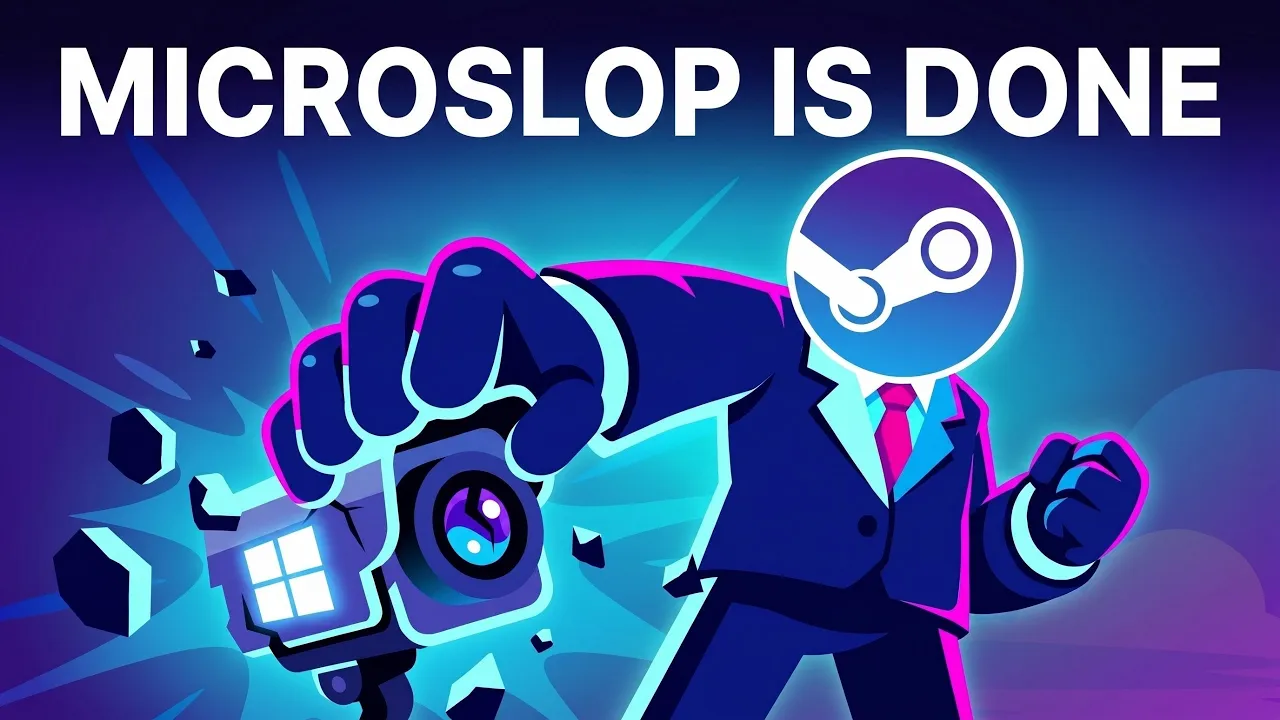
For decades, Microsoft controlled PC gaming. If you wanted to play, you used Windows. It wasn’t just the dominant operating system, it was the platform that gaming was built around. Developers optimized for it, gamers relied on it, and competitors struggled to challenge it. But something has changed. While Microsoft focused on subscriptions, AI features, cloud services, and ecosystem lock-in, Valve spent years working on a completely different vision. A future where PC gaming no longer depends on Windows at all.
It started with SteamOS. Then came Proton, a compatibility layer many experts believed would never be good enough to replace Windows gaming. Finally, the Steam Deck arrived and proved something shocking. Millions of PC games could run on Linux with little or no effort from players. What looked like a niche experiment quickly became a serious threat to Microsoft’s dominance.
This isn’t just a story about a handheld gaming device., it’s about platform control. It’s about who owns the future of PC gaming, and it’s about whether gamers will continue accepting an operating system increasingly filled with telemetry, subscriptions, ads, and AI features, or choose a different path. Valve isn’t trying to beat Microsoft in the console market, it’s trying to make Windows optional. And for the first time in decades, that goal doesn’t look impossible.
00:44 - The Glass House
02:42 - The Performance Tax
04:32 - The Anti Cheat Illusion
06:04 - The Hardware Anomaly
08:36 - Project K2
11:19 - The Silent Build
13:02 - The Trap Closes
14:40 - The Sovereign OS
Narrated by: Josh Risser
You must log in or # to comment.