

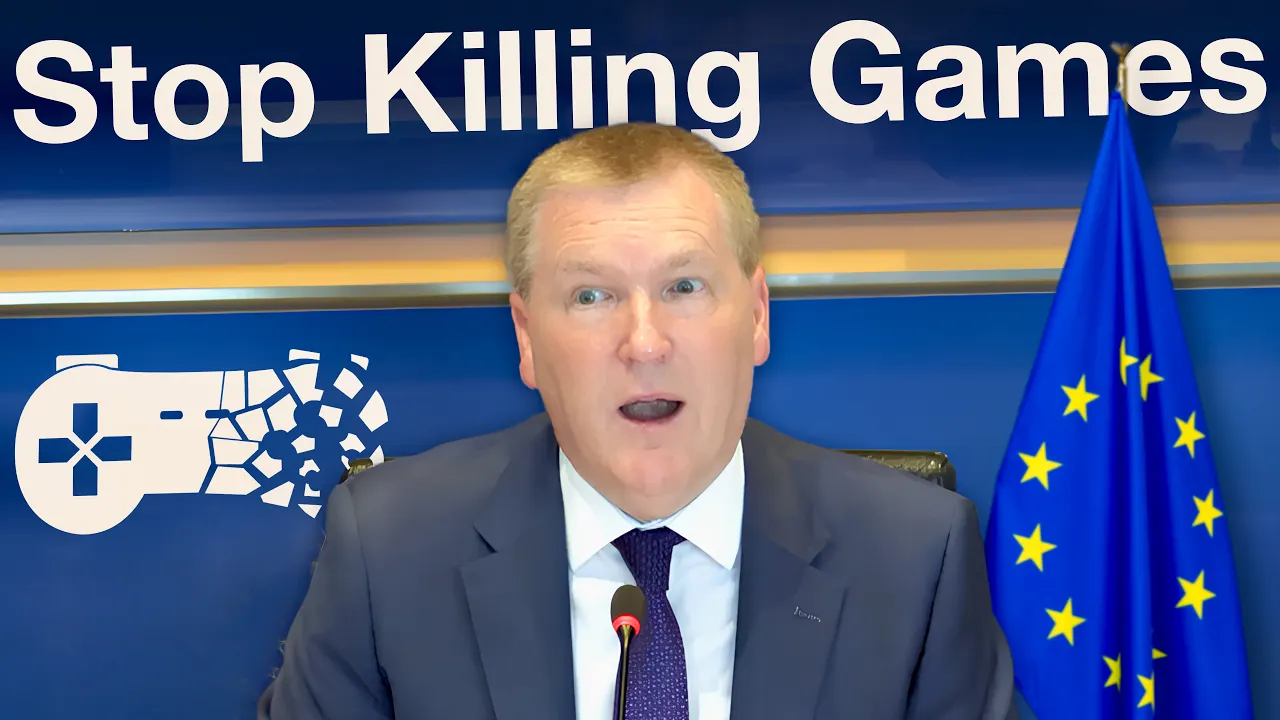
European Commissioner Michael McGrath comments on the “Stop Destroying Video Games” European Citizens’ Initiative, widely known as Stop Killing Games, during a structured dialogue with the European Parliament’s IMCO Committee on 7 May 2026. This is an edited (transformative) version created to improve accessibility. Edits that add transformative value include cutting repetition, silences, and stutters; restructuring the content by theme and topic; adding on-screen context; and enhancing video and audio quality. This edited version does not distort the meaning or message of the original video.
In this short exchange, McGrath says the European Commission’s response to the initiative is expected on 16 June. He stresses that it is still too early to say what the Commission’s final position will be, noting that the response will have to be considered collectively by the College of Commissioners.
McGrath also confirms that he met the organisers of the Stop Destroying Video Games petition in February, together with Executive Vice-President Henna Virkkunen, and that the organisers presented their case directly to the Commission.
The exchange took place during the IMCO meeting titled “Structured dialogue with Michael McGrath, European Commissioner for Democracy, Justice, the Rule of Law and Consumer Protection”, held from 09:00 to 10:30 on 7 May 2026.
IMCO Chair Anna Cavazzini also refers to the recent joint European Parliament hearing with JURI, where the Stop Killing Games initiative received significant attention and support from MEPs. She notes that Parliament is expected to hold a plenary discussion on the initiative on 21 May.
The Stop Destroying Video Games initiative calls for stronger consumer protection around video games that are sold to customers but later made unplayable when publishers shut down servers or end support. The campaign has become widely known online as Stop Killing Games.
This clip is relevant for viewers following the Stop Killing Games campaign, the European Citizens’ Initiative process, EU consumer protection, digital ownership, game preservation, and the legal debate over what happens when purchased games are permanently disabled.
You must log in or # to comment.